Order your debts smallest to largest and see how each payment rolls into the next.
The debt snowball is the simplest payoff method there is: pay the minimum on everything, put every spare dollar on the smallest balance, and when that one is gone roll its whole payment onto the next smallest. The payments grow as the debts fall, which is where the name comes from.
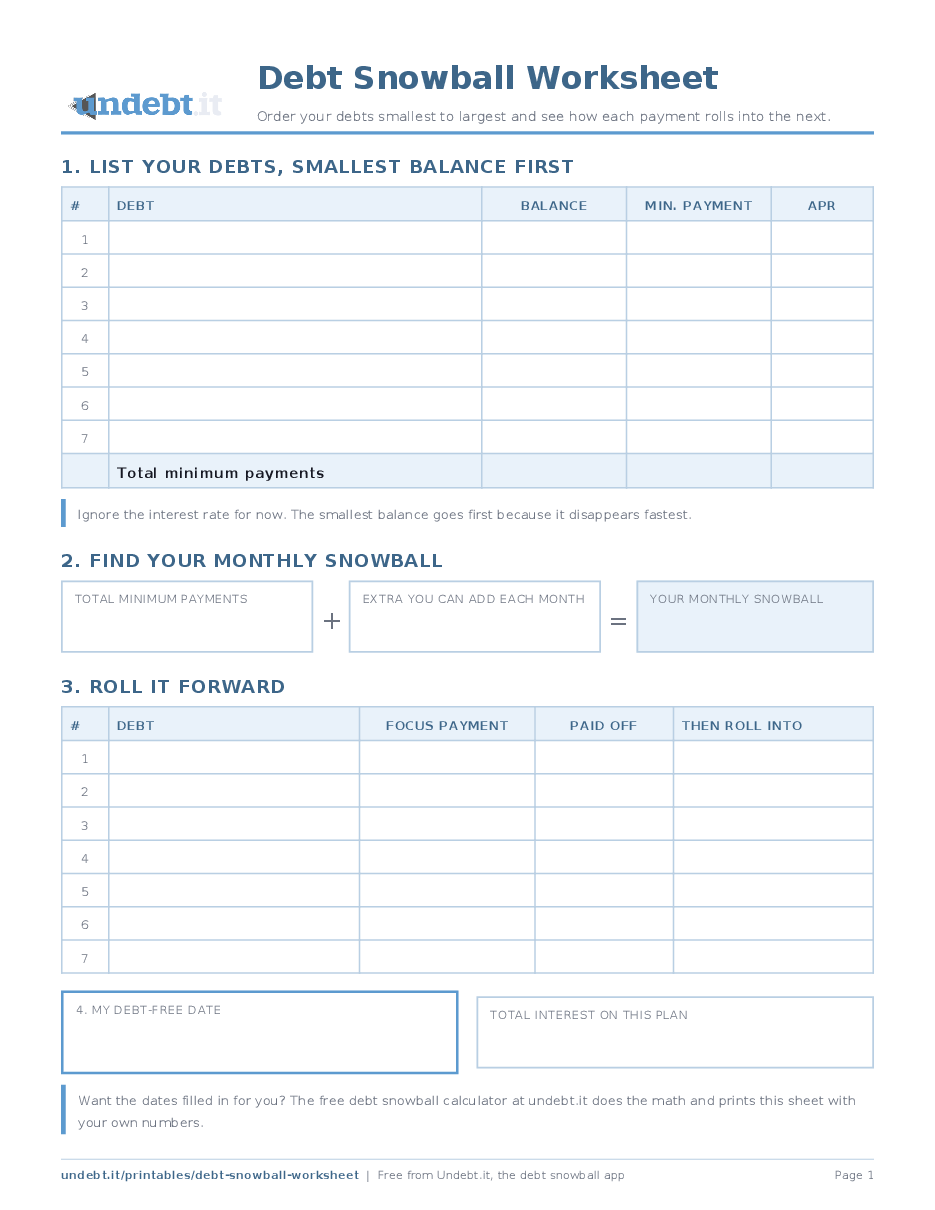
This worksheet walks the method in four steps on one page. List the debts smallest first. Add your minimums to the extra you can find each month to get your monthly snowball. Roll it forward, debt by debt, writing down the payment each one gets while it is the focus. Then write the date you will be debt free.
The snowball is not the cheapest method in interest terms; the debt avalanche usually saves more. It is the method people actually finish, because the first debt disappears fast and the second faster still. If you want the numbers done for you, the free debt snowball calculator computes every payment and payoff date in seconds.
Download the free PDF
Free, no signup, no email address. Pick your paper size; every version is one page and prints on any home printer.
The ink saver version is the same sheet in black and gray for cheap printing. Print at 100 percent, not "fit to page", so the rows stay a comfortable height for handwriting.
Rather have the numbers filled in for you? Undebt.it members can open Printables in the member menu and get this sheet built from their own plan. A free Undebt.it account is all it takes.
What it looks like filled in
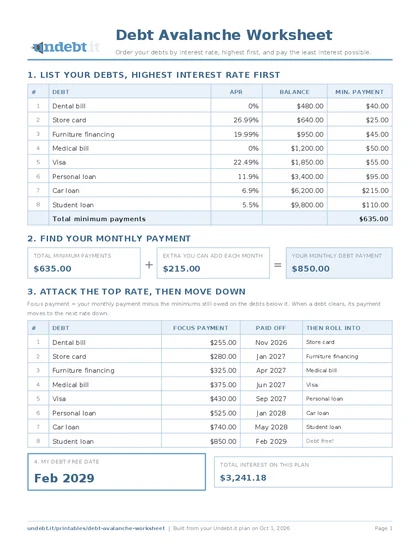
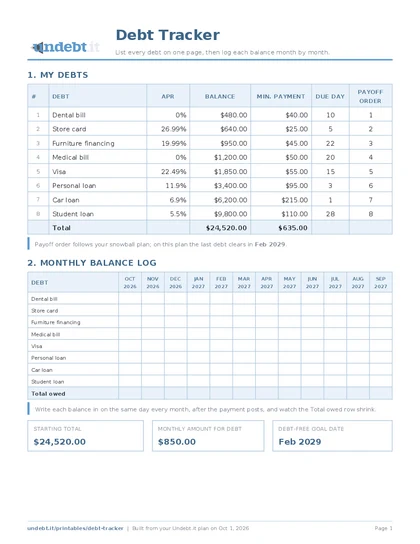
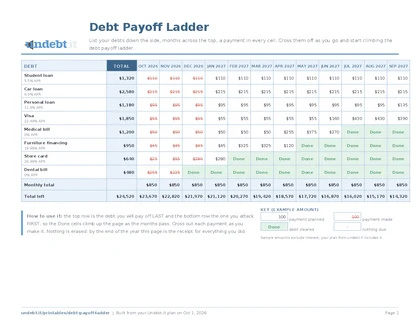
The same sheet completed with a sample plan: eight made-up debts totalling $24,520, paid down at $850 a month in snowball order. Demo numbers, just enough to show how the page is meant to be used.
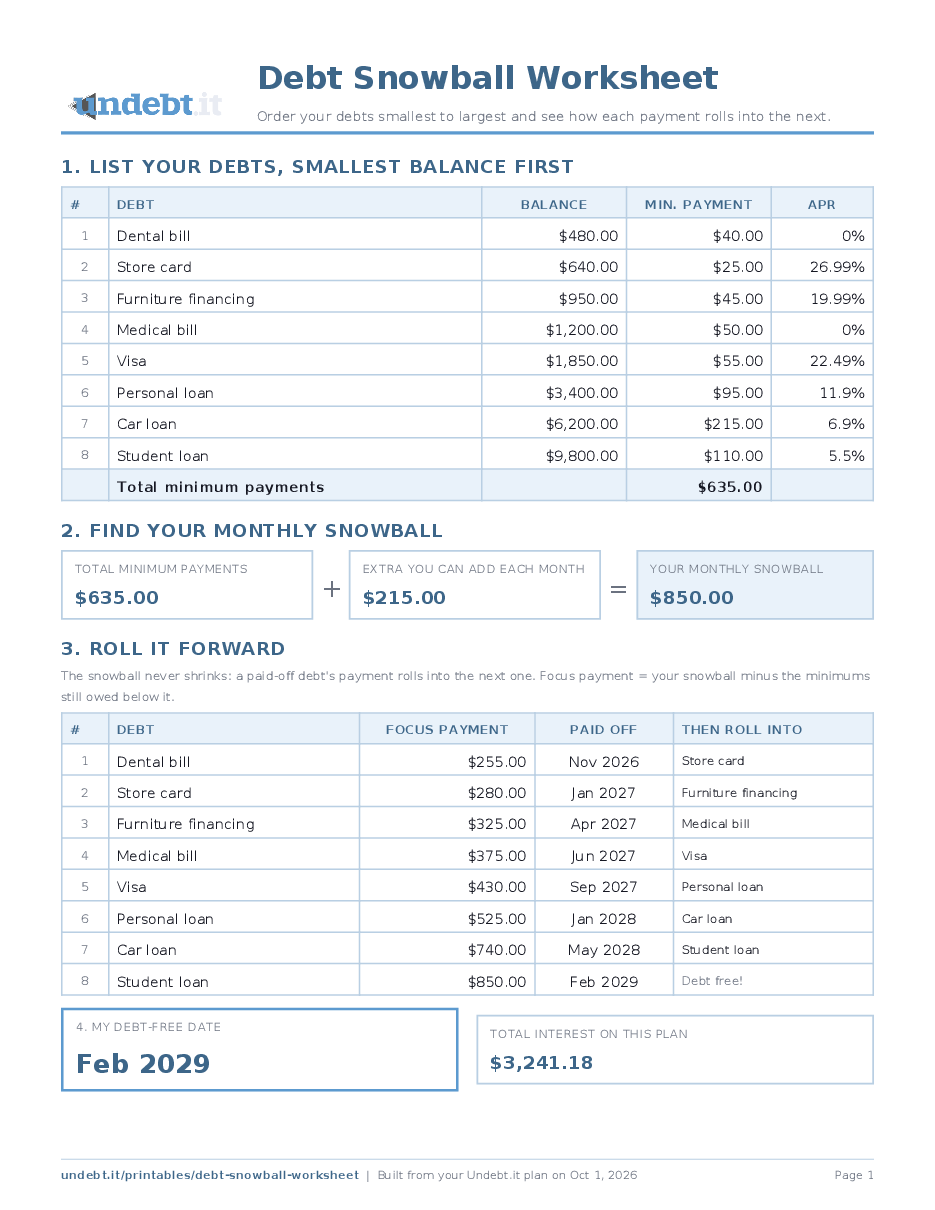
Open the filled-in example as a PDF. The download buttons above give you the blank sheet.
How to use it
- Step 1: list smallest to largest. Balance is all that matters for the order. Write the minimum payment and APR beside each one and total the minimums.
- Step 2: find your snowball. Total minimums plus the extra you can commit every month. That number never goes down: when a debt is paid off, its payment stays in the snowball.
- Step 3: roll it forward. The focus debt gets the snowball minus the minimums still owed on the debts below it. When it clears, the next debt becomes the focus and gets a bigger payment.
- Step 4: name the date. Estimate it, or let the calculator tell you exactly. Write it on the sheet and put the sheet where you will see it.
Tips that make it stick
- If two balances are close, put the one with the higher rate first.The snowball is a rule of thumb, not a law.
- Round the extra down to a number you can hit even in a bad month.A snowball that survives December is worth more than a bigger one that does not.
- Windfalls (a tax refund, a bonus, a sold bicycle) go straight onto the focus debt.Then keep the regular snowball going as if nothing happened.