Every card, its rate and its credit limit, with a monthly log to watch the balances and the utilization fall.
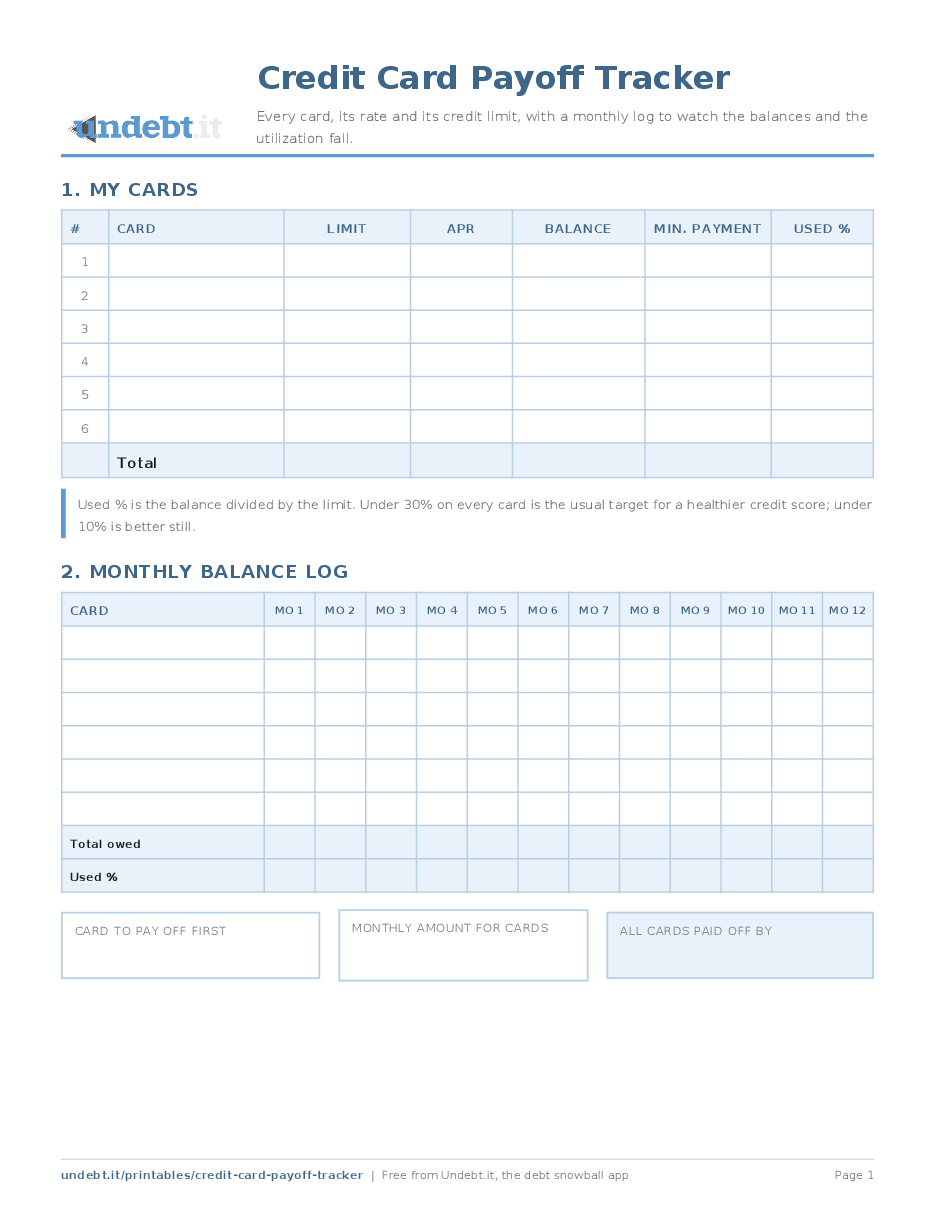
Credit cards are the debts that fight back. The rate is high, the minimum is designed to keep you paying for years, and the balance creeps up again if the card stays in your wallet. This tracker is built for them: every card with its limit, APR, balance, minimum payment and the percentage of the limit you are using, then a twelve-month log of balances and utilization.
Utilization is the extra column you will not find on a general debt tracker. It is the balance divided by the limit, and it matters twice: it is a large part of your credit score, and it is the number that tells you which card is closest to being a problem. Under 30 percent on every card is the usual target; under 10 is better.
Order the cards the way you plan to pay them, smallest balance first for a snowball or highest APR first for an avalanche, and write the first target in the box at the bottom. With cards, the avalanche saves real money, because the rates are high and they differ a lot from card to card.
Download the free PDF
Free, no signup, no email address. Pick your paper size; every version is one page and prints on any home printer.
The ink saver version is the same sheet in black and gray for cheap printing. Print at 100 percent, not "fit to page", so the rows stay a comfortable height for handwriting.
Rather have the numbers filled in for you? Undebt.it members can open Printables in the member menu and get this sheet built from their own plan. A free Undebt.it account is all it takes.
What it looks like filled in
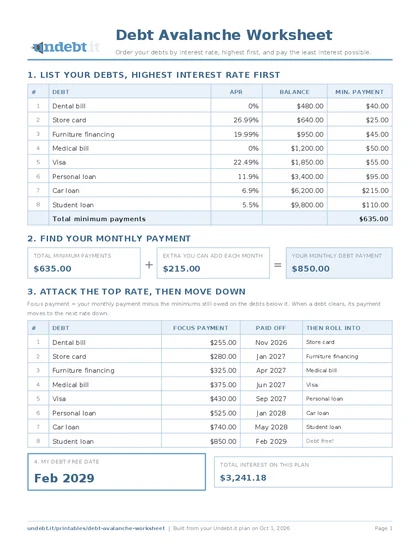
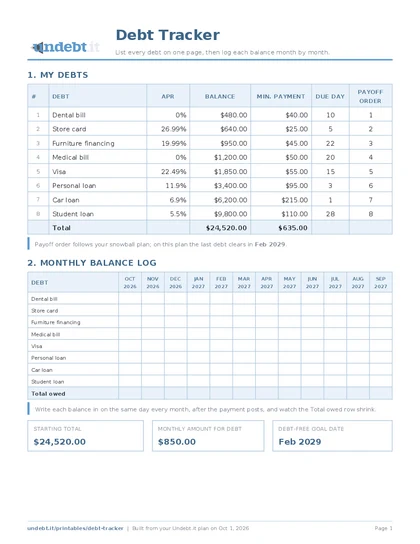
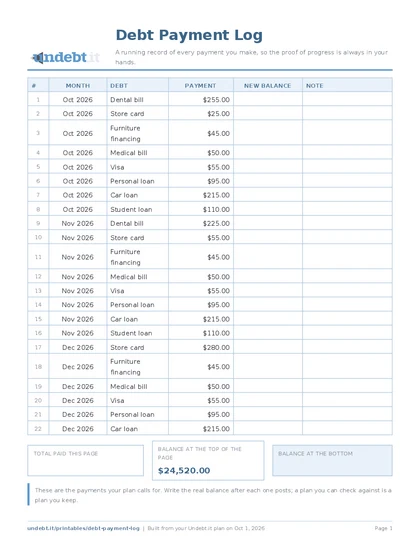
The same sheet completed with a sample plan: eight made-up debts totalling $24,520, paid down at $850 a month in snowball order. Demo numbers, just enough to show how the page is meant to be used.
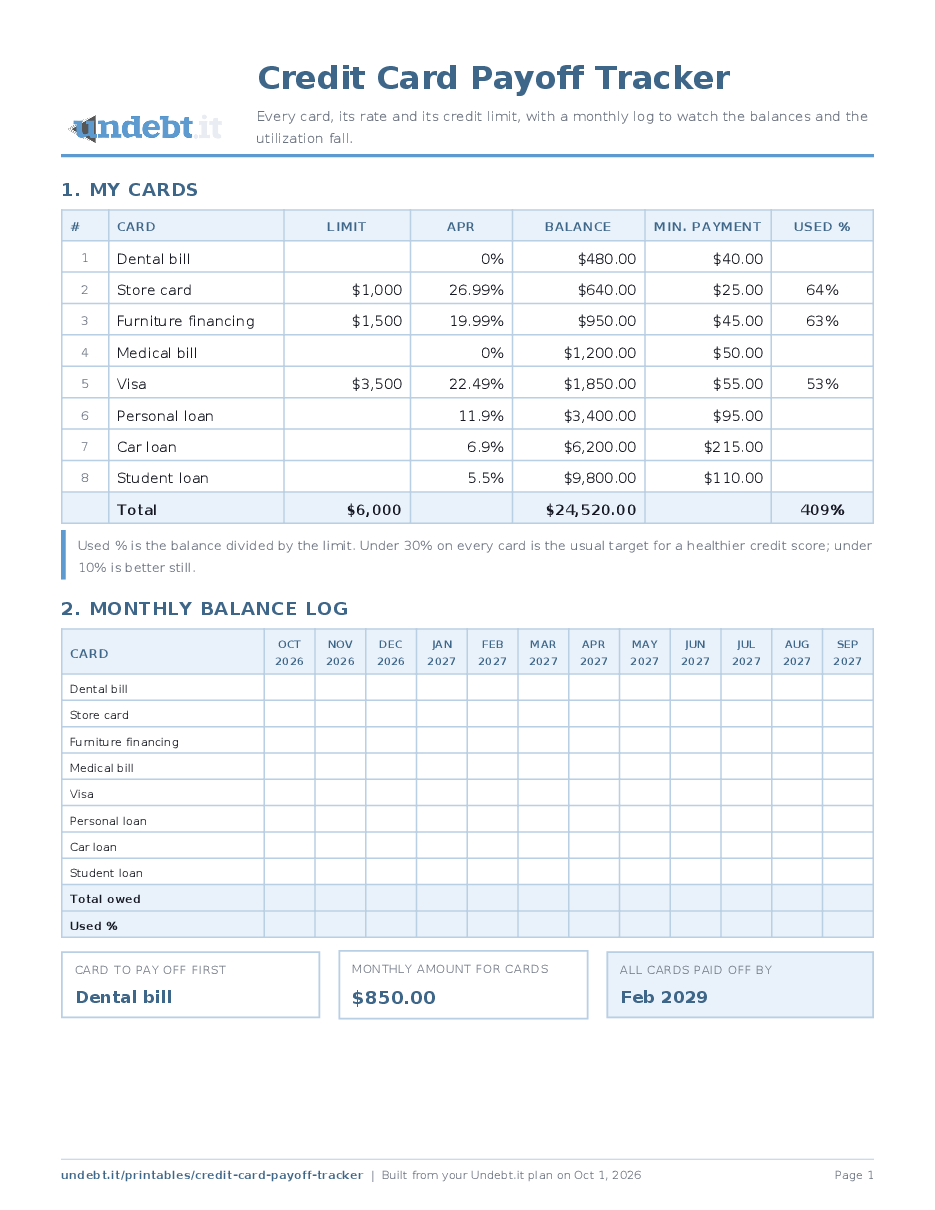
Open the filled-in example as a PDF. The download buttons above give you the blank sheet.
How to use it
- List every card, including store cards and any card with a zero balance you still use. Limit, APR and minimum come straight from the statement.
- Work out utilization for each card and for the total: balance divided by limit, as a percentage. Circle any card over 30 percent.
- Log monthly. After the statements close, write each balance into that month's column, total the column and work out the overall utilization.
- Pick the first card to attack and write it in the box, with the total you will send to cards each month and the date you expect them all to be cleared.
Tips that make it stick
- Pay before the statement closes, not just before the due date.The balance reported to the credit bureaus is the statement balance, so an earlier payment lowers your reported utilization.
- Do not close a card the moment it is paid off; the limit still helps your utilization.Cut it up if you must, but leave the account open unless it carries a fee.
- A 0% balance transfer can be a good move.Write the date the promotion ends on the sheet and plan to be clear before then.